
Artificial intelligence has moved far beyond hype. It is reshaping how companies build products, serve customers, and compete. Challenging job-market forecasts only reinforce this trend.
In this article, you will discover why AI governance has evolved from a “nice-to-have” into a high-stakes “Trust Race.” As global regulations tighten and multi-billion dollar lawsuits become reality, organizations are shifting from asking if they should use AI to how they can scale it without catastrophic liability.
- Global Regulatory Shifts: A breakdown of the EU AI Act and the emerging U.S. state-law patchwork (CA, CO, TX) that make “wait and see” a dangerous strategy.
- The $1.5B Reality Check: Lessons from landmark cases like Bartz v. Anthropic and the reputational fallout from AI “hallucinations.”
- ISO/IEC 42001: Why this certifiable standard is the new global benchmark for building a resilient AI Management System (AIMS).
- Speed to Compliance: How to turn audit readiness into a revenue driver by slashing certification timelines from months to minutes using MAXI.Compliance.
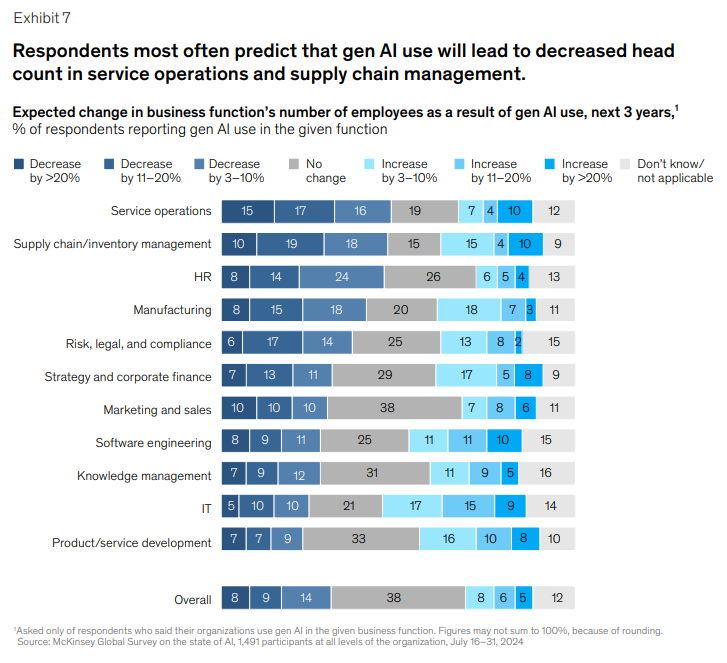
The McKinsey’s “The State of AI 2025” report as an example – AI adoption is accelerating at a breakneck pace. With giants like Google and Microsoft embedding AI deeply into their ecosystems, avoiding AI is no longer a realistic option.
The real question for decision-makers today is no longer “should we use AI?” but “how do we scale it without getting sued or shut down?
The “Simple” AI Formula and the Not-So-Simple Reality
Think of AI as a high-stakes lottery: the owner feeds the machine with data, and the user hopes to pull out a “winning” result. The better the data, the better the odds. But as any CISO will tell you, the lottery is often rigged by hidden complexities.
Implementing effective AI governance best practices starts with understanding that AI is a broad umbrella, and each sub-category – from basic Machine Learning to complex Neural Networks – requires a different set of guardrails. Each type of AI is defined by its purpose and architecture, illustrated by this diagram:
As we move deeper into AI architecture, the governance requirements shift dramatically:
- The Model Taxonomy. AI isn’t a monolith. From Machine Learning and Neural Networks to Large Language Models (LLMs), each architecture introduces unique vulnerabilities.
- Deployment Models. Whether you use ChatGPT as a SaaS solution or deploy open-source models like Llama on-premise, your responsibility for the data “lifecycle” remains the same.
- The Complexity Gap. As systems scale, “simple” models become “black boxes.” This makes query sanitization, result predictability, and data provenance the most pressing AI governance challenges in modern data governance.
Data governance in particular seems to be a pressing challenge, especially given the lack of specialists on the job market, regulatory pressure, and rising costs of high-quality training data.
Discover how these technical complexities translate into specific compliance risks.
Get & Stay ISO 42001 Certified with MAXI.Compliance in Autopilot
With Great Power Comes Legal Accountability
National governments have made a final determination: AI developers are responsible for failures that harm people or fail to deliver promised results. This “accountability shift” makes AI risk management an essential survival practice.
Those who master the regulatory landscape first are winning the “Trust Race,” so here are three major pillars that define the current risks:
AI Act
The EU Artificial Intelligence Act is the first comprehensive, legally binding AI regulation globally. It creates a risk-based framework for AI systems, classifying them from minimal to high risk and prohibiting those deemed unacceptable (e.g., social scoring, manipulative AI, certain biometric surveillance). High-risk systems must meet strict requirements – such as AI risk management, transparency, human oversight, and conformity assessments – before they can be placed on the EU market.
The EU AI Act is extraterritorial, meaning it applies both to EU companies and any others that plan on using European data or markets.
US President’s Executive Order 14179
Executive Order 14179 is a U.S. federal policy directive focused on enhancing American leadership in AI innovation. Rather than imposing new safety or civil rights regulations, it revokes or rescinds previous federal AI policies seen as barriers and directs federal agencies to develop an AI Action Plan within 180 days to strengthen competitiveness, economic growth, and national security. It emphasizes removing regulatory obstacles, streamlining research and federal use of AI, and aligning policies across agencies, but does not create new enforceable rights or comprehensive safety rules.
Proposed US AI Bill of Rights
The U.S. “AI Bill of Rights” is currently a voluntary policy framework released by the White House Office of Science and Technology Policy. It is not a law yet; rather, it sets out five guiding principles for how AI and automated systems should be designed and deployed to protect people’s civil rights and democratic values:
- safe and effective systems
- protection against algorithmic discrimination
- privacy and control over data
- transparency about AI use and decisions
- human alternatives and the ability to challenge automated decisions
As it is a blueprint, it does not impose legal obligations, but it influences agency policies and the broader AI governance debate in the U.S.
U.S. State-Specific AI Laws
In addition to that, there is a patchwork of different state-specific laws. As you can see from the map below, only a few states do not actually have any requirements related to AI.
Source: https://ai-law-center.orrick.com/us-ai-law-tracker/
As we look at the landscape from the EU to the US, a clear pattern emerges: the “wait and see” approach to AI risk is officially a liability. Whether it’s the mandatory transparency of the EU AI Act or the innovation-focused Action Plans in the US, the burden of proof has shifted to the enterprise. You are now expected to demonstrate “Governance-by-Design.”
The challenge for 2026 isn’t just complying with one law – it’s building a single, resilient AI governance framework that satisfies them all simultaneously.
But how do you move from a list of legal threats to a functioning security posture? The answer lies in the first global standard for AI: ISO/IEC 42001.
The Cost of Chaos: Why “No Federal Law” Does Not Mean No Liability
Many US-based companies fall into the trap of thinking that a lack of a single federal AI law means a “free pass.” In reality, the vacuum is being filled by aggressive litigation. The headlines are no longer just about Meta or OpenAI; they are about any company failing to govern its models.
Without an automated AI Management System (AIMS), your organization is exposed to three critical threats:
- The Multi-Billion Dollar Intellectual Property Trap. Training on “public” data isn’t a legal shield. Bartz v. Anthropic resulted in a record-breaking $1.5 billion settlement for copyright infringement. If you aren’t auditing your training sets, you’re inheriting their liability.
- Reputational damage via “Hallucinations”. It’s not just about the money. In Lonnie Allbaugh v. University of Scranton, the court penalized the use of a non-existent AI-generated legal authority. While the fine was modest (1 000$), the damage to professional credibility was permanent.
- The Safety Liability Gap. When AI provides advice that leads to physical or emotional harm, the liability rests solely on the deployer. From bad medical advice to dangerous technical instructions, “harmful hallucinations” are triggering a new wave of personal injury lawsuits.
The only way to mitigate these risks at scale is to move beyond manual oversight. By aligning with AI compliance frameworks like ISO 42001, you replace guesswork with a documented “defense-in-depth” strategy.
The Absence of a Single U.S. Federal Law Doesn’t Mean There Won’t Be Litigation
You’ve probably heard about lawsuits against Meta, OpenAI, and other major companies. Your AI must be properly managed to avoid outcomes such as:
- Copyright infringement
In Bartz v. Anthropic, plaintiffs allege that training data, including thousands of books, were collected and processed without authorization, resulting in copyright infringement. The case led to a reported $1.5 billion settlement.
- Misleading hallucinations
Lawyers and plaintiffs in courts often rely on AI to build the case by working with a large body of law. For instance, in Lonnie Allbaugh v. University of Scranton, the court found that Allbaugh had cited non-existent legal authority generated by artificial intelligence. While the resulting settlement was a modest fee of 1 000$, the reputational damage is likely to be more substantial.
- Harmful hallucinations
AI is no stranger to giving bad advice, leading to potential harm to humans. When AI provides advice that leads to physical or emotional harm, the liability rests solely on the deployer. There are several lawsuits related to harmful hallucinations in progress, but no one would want AI to make their bad day even worse.
Spot the Gaps in Your AI Management Before They Scale
ISO/IEC 42001: The New Gold Standard for AI Trust
You can’t afford to chase every new state-level mandate or federal executive order individually. In a fragmented legal landscape, you need a unified foundation. ISO/IEC 42001 (AIMS) is the world’s first certifiable standard that bridges the gap between your internal development and global requirements like the EU AI Act and US federal directives. It doesn’t just list rules; it provides a single, scalable AI governance framework that satisfies auditors, regulators, and enterprise customers simultaneously.
Key pillars of the AIMS framework:
- Business over Code
It doesn’t tell you how to write algorithms; it tells you how to run AI as a professional business capability.
- Governance & Accountability
It builds a clear chain of command for AI risk, whether you develop in-house models or use third-party APIs.
- Certifiable Authority
Unlike the NIST AI RMF, which provides excellent guidance, ISO 42001 is certifiable. This means you can prove your AI governance compliance to partners and auditors instantly.
The Strategic Payoff?
- Building Trust: In the AI era, trust is the new currency. Demonstrate your commitment to transparency and bias mitigation to win over cautious stakeholders and investors.
- Accelerated Sales: Drastically cut down on time spent answering third-party risk and insurance questionnaires.
- Competitive Moat: Build brand recognition and a distinct competitive advantage by being among the first to hold this gold-standard certification.
- Safe Innovation: Aligning with a core AI compliance framework like ISO 42001 provides a “single source of truth” that scales with your product, ensuring your AI remains compliant by design even as global requirements shift.
- Legal Fortification: Secure your operations against unintended use and provide a documented “duty of care” against litigation.
Get ISO 42001 Certified on Autopilot with MAXI.Compliance
The biggest hurdle to scaling your AI isn’t innovation; it’s passing the grueling security standards of the modern enterprise. If your compliance process is manual, you’re bleeding months of deal velocity to red tape.
MAXI.Compliance by UnderDefense transforms ISO 42001 from a complex regulatory burden into a high-speed revenue driver. We automate the most time-consuming workflows of AI governance, giving you an entry ticket to global markets that clears the path for faster, larger contracts.
Why Leading AI Teams Choose MAXI.Compliance:
- Fastest compliance. Stop waiting months for results. Reach 40% audit readiness in your first 40 minutes with our AI-powered quickstart and automated gap assessments.
- Continuous Evidence Collection. Replace the manual “fire drill” with 24/7 monitoring. MAXI integrates directly with your stack – AWS, Azure, GitHub, and more – to automatically collect evidence.
- AI Audit Simulation. Don’t enter your certification blindly. Our platform runs a “rehearsal” that mirrors real auditor behavior, identifying gaps in your model monitoring before they become liabilities.
- Eliminate Duplicative Work. Already SOC 2 or ISO 27001 compliant? Our cross-mapping engine syncs your existing controls to ISO 42001 requirements instantly, saving hundreds of engineering hours.
- A Trust Center for Your Sales Team. Replace endless security questionnaires with a real-time dashboard. Give prospects the documented proof of accountability they need to sign today.
With a 100% audit success rate and the backing of seasoned cyber consultants, we ensure your certification isn’t just a goal, but a guaranteed business outcome.
Turn AI Governance into a Revenue Driver with MAXI.Compliance
1. What are AI governance best practices for enterprises in 2026?
AI governance best practices include establishing clear accountability structures, implementing comprehensive AI risk management processes, ensuring transparency in AI decision-making, conducting regular audits of AI systems, maintaining thorough documentation, training staff on ethical AI use, and adopting recognized AI compliance frameworks like ISO 42001. Organizations should also prioritize data quality, implement bias detection mechanisms, and create incident response protocols for AI failures.
2. How does ISO 42001 address AI governance challenges?
ISO 42001 tackles common AI governance challenges by providing a structured, certifiable framework that covers the entire AI lifecycle. It addresses key challenges including lack of standardization, unclear accountability, data governance complexity, model transparency issues, and regulatory compliance uncertainty. The standard offers practical controls for risk assessment, documentation requirements, and continuous monitoring, making it easier for organizations to navigate the complex landscape of AI governance.
3. What is the difference between AI compliance frameworks like ISO 42001 and NIST AI RMF?
While both are valuable AI compliance frameworks, ISO 42001 is a certifiable international standard that provides specific requirements for an AI Management System (AIMS), allowing organizations to demonstrate compliance through third-party audits. NIST AI RMF, on the other hand, is a voluntary guidance framework focused on AI risk management principles. ISO 42001 offers more prescriptive controls and the ability to achieve formal certification, making it particularly valuable for vendor trust and regulatory compliance.
4. How can organizations implement effective AI risk management?
Effective AI risk management requires a systematic approach: identify AI systems and their risk levels, assess potential harms and vulnerabilities, implement appropriate controls and safeguards, continuously monitor AI performance, document all processes, establish clear governance structures, and maintain incident response procedures. Organizations should adopt frameworks like ISO 42001 that provide structured methodologies for managing AI risks throughout the development and deployment lifecycle.
5. What are the key components of an AI governance framework?
A robust AI governance framework includes several essential components: clear roles and accountability structures, AI risk management processes, ethical guidelines and principles, data governance policies, model development and validation standards, transparency and explainability requirements, monitoring and auditing mechanisms, incident management procedures, stakeholder engagement protocols, and compliance tracking systems. ISO 42001 provides a comprehensive template for implementing these components systematically.
6. How does AI governance compliance benefit business operations?
AI governance compliance delivers multiple business benefits: reduced legal and regulatory risks, faster sales cycles through demonstrated trustworthiness, competitive differentiation in the market, improved stakeholder confidence, better AI system performance through structured oversight, protection against reputational damage, easier access to enterprise customers who require compliance evidence, and streamlined responses to security questionnaires. Compliance frameworks like ISO 42001 transform governance from a cost center into a revenue enabler.
7. What are the most common AI governance challenges organizations face?
The most pressing AI governance challenges include: navigating fragmented regulatory landscapes across different jurisdictions, managing the “black box” nature of complex AI models, ensuring data quality and provenance, addressing algorithmic bias and fairness concerns, maintaining transparency while protecting intellectual property, scaling governance practices as AI adoption grows, integrating AI governance with existing compliance programs, finding qualified AI governance professionals, and balancing innovation speed with risk management. Adopting AI governance best practices and standards like ISO 42001 helps organizations overcome these obstacles systematically.
8. Where can I purchase compliance automation software for cybersecurity?
Compliance automation software is typically purchased directly from vendors through their websites or sales teams. For UnderDefense MAXI Compliance, you can schedule a demo to see the platform in action and discuss pricing tailored to your organization’s needs. Most enterprise compliance platforms are offered as SaaS (Software-as-a-Service) subscriptions rather than one-time purchases, with pricing based on factors like company size, number of users, and frameworks covered. When evaluating vendors, look beyond price to consider implementation support, ongoing training, customer service responsiveness, and how well the platform integrates with your existing security tools and workflows.
The post AI Compliance and ISO 42001: A Practical Guide to AI Governance appeared first on UnderDefense.